
China’s e-cigarette export industry is entering a major transition period. According to official announcements and multiple industry reports, the government will implement a significant tax policy adjustment that is expected to reshape cost structures, pricing strategies, and even the competitive landscape of the global supply chain.
This article summarizes the official policy, industry analysis, and market reaction to help international buyers understand what to expect in 2026.
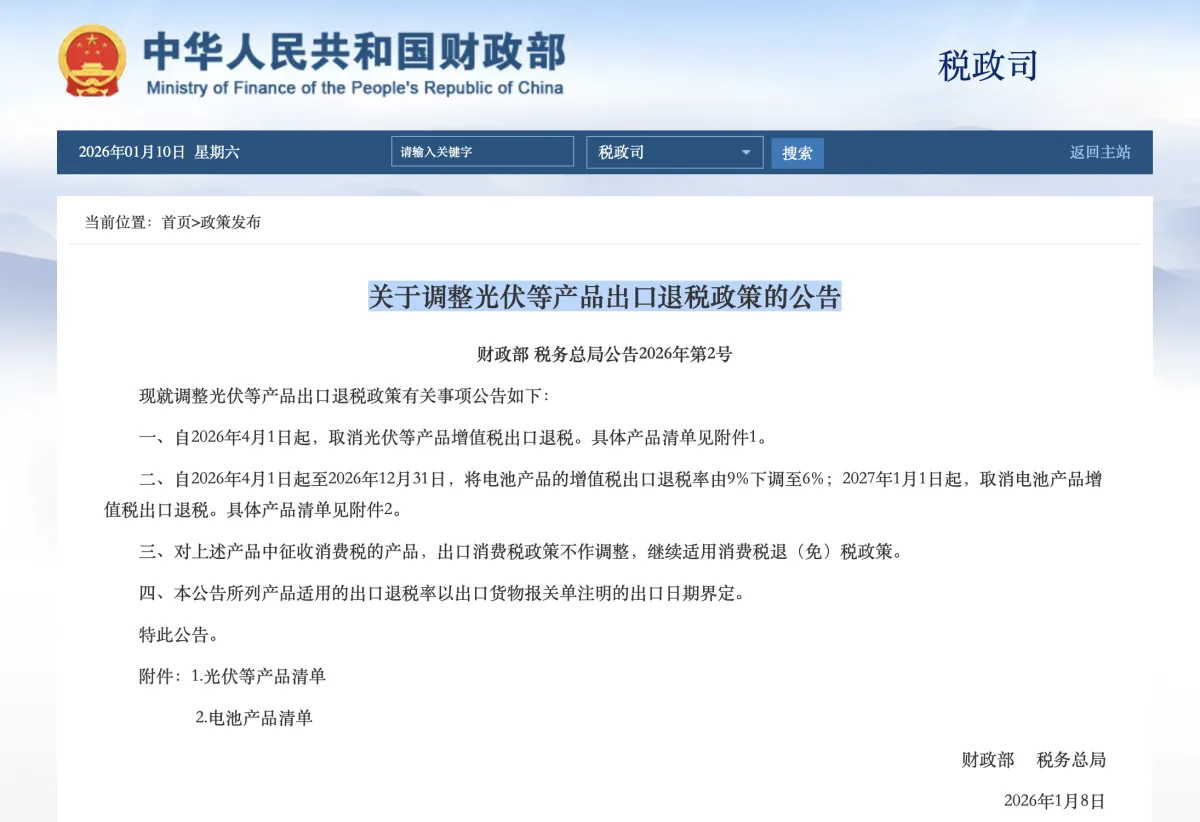
1. Official Policy: Export VAT Rebate Cancelled
The Ministry of Finance of the People’s Republic of China and the State Taxation Administration have announced a major policy change. Starting April 1, 2026, China will cancel the 13% VAT export rebate for e-cigarette products.
The new rule covers key categories, including:
- HS 2404120000 – Non-combustible nicotine-containing products
- HS 85434000.90 – Electronic cigarettes and similar devices
For years, the 13% rebate played a key role in export pricing. Its removal will directly change cost structures and force manufacturers and exporters to adjust their pricing strategies.
2. Direct Impact: Cost Pressure Across the Supply Chain
Most e-cigarette manufacturers operate with profit margins of only 8%–12%. The 13% rebate has been critical to maintaining profitability.
Once the rebate disappears, production costs will rise immediately. Suppliers will need to rebalance margins across the entire supply chain. Industry estimates suggest export prices will increase by about 8%–15% to absorb the additional tax burden.
For distributors and wholesalers, this means:
- Higher procurement costs starting in Q2 2026
- Price adjustments across multiple product lines
- A stronger need for early purchasing and inventory planning
Companies that secure stock in advance will be better positioned to control costs.
3. Industry Analysis: Structural Reshaping of Manufacturing
According to research from 2Firsts, the policy will reshape China’s e-cigarette manufacturing landscape.
Suppliers are already reviewing their pricing models and reallocating margins. At the same time, many companies are restructuring their supply chains to improve efficiency and reduce operating costs.
Small and mid-sized factories face the greatest pressure. Many rely on low pricing and operate with limited financial reserves. Some may struggle to absorb the new costs.
The industry is also moving toward stricter compliance, standardized production, and stronger operational control. Manufacturing centers such as Shenzhen, where export production is highly concentrated, will feel the impact first as companies quickly adjust production plans and customer strategies.
4. Capital Market Reaction: Favoring Large Manufacturers
The policy has already affected the capital market. Shares of Smoore International Holdings showed clear volatility after the announcement.
In the short term, investors expect pressure on margins and some operational uncertainty. Over the longer term, the outlook is more positive. The policy is likely to accelerate industry consolidation and increase market concentration.
Large, compliant manufacturers with strong global customer bases will gain a competitive advantage. Smaller producers may struggle to absorb rising costs and could gradually exit the market.
5. What This Means for Global Buyers
The 2026 policy marks a turning point for China’s e-cigarette export sector. Buyers should prepare for both short-term adjustments and long-term structural changes.
In the near term, expect:
- Gradual price increases across most product categories
- Updated quotations from suppliers
- Longer lead times as factories optimize production
Over time, the industry will become more standardized and compliant. Supply chains will rely more on large, stable manufacturers. At the same time, low-price competition from smaller factories will decline.
For distributors, wholesalers, and brand owners, early planning and strategic purchasing will be critical to controlling costs and ensuring stable supply.
6. Market Outlook
Although the policy increases costs, the industry views it as a structural upgrade rather than a short-term disruption.
Over the next 12–24 months, the market is likely to see:
- Higher industry concentration
- More stable pricing
- Greater focus on quality and compliance
- Stronger long-term supplier partnerships
Working with reliable suppliers and securing inventory before price adjustments will help reduce risk.
Vapemaison will continue to monitor policy developments and provide updates on their impact on global e-cigarette supply.
 English
  Deutsch
  Français
  Italiano
  Español
  Nederlands
  Polski
  日本語
日本語