
I. Introduction : Un moment de profond malaise
Récemment, j'ai eu une conversation avec la fille de 13 ans d'une amie qui m'a profondément déstabilisée. Je lui ai demandé, de manière tout à fait décontractée, si les enfants de son école s'adonnaient au vapotage. Elle a détourné le regard, l'a parcouru d'une lueur d'hésitation avant de répondre fermement : “Non, je ne fais pas ça”.”
Je veux la croire. Je le veux vraiment. Mais en tant que personne ayant passé des années dans l'industrie de l'e-cigarette, j'ai reconnu ce regard. Ce n'était pas seulement un défi d'adolescent ; c'était le regard d'un enfant pris entre la curiosité et un secret qu'il n'est pas équipé pour gérer. Ce moment d'incertitude m'a hanté. Il m'a forcé à affronter une dure vérité : les produits censés aider les fumeurs adultes à abandonner les cigarettes traditionnelles se retrouvent de plus en plus souvent entre les mains d'enfants qui n'auraient jamais dû en connaître le goût.
II. Une position professionnelle : Le profit ne doit jamais faire oublier la conscience
Soyons clairs dès le départ : mon site web vend des e-cigarettes. Je crois au potentiel de réduction des risques pour les fumeurs adultes. Cependant, le fait d'être un professionnel de ce secteur s'accompagne d'une lourde responsabilité sociale. Notre mission est d'offrir une alternative à ceux qui ont déjà passé des décennies à lutter contre le tabac, et non de créer une nouvelle génération de personnes dépendantes de la nicotine.
Dans le monde des affaires, un vieil adage dit que “le profit est roi”, mais dans ce secteur, l'éthique doit être l'empereur. Tout profit réalisé sur la santé d'un mineur n'est pas seulement contraire à l'éthique, c'est une trahison de l'objectif initial de l'industrie. Nous devons maintenir une politique de “tolérance zéro”. Si nos produits touchent des jeunes de 13 ans, nous ne “perturbons” pas un secteur, nous laissons tomber une génération. En tant que commerçant, je plaide en faveur d'interdictions plus strictes et d'une vérification plus rigoureuse de l'âge, car notre succès ne devrait jamais être mesuré par le nombre d'enfants que nous recrutons accidentellement.
III. Analyse approfondie : Pourquoi nos enfants deviennent-ils des victimes ?
La question que nous devons nous poser est la suivante : pourquoi les enfants sont-ils si attirés par ces appareils ? La réponse se trouve dans une tempête parfaite de design, de psychologie et de pression sociale.
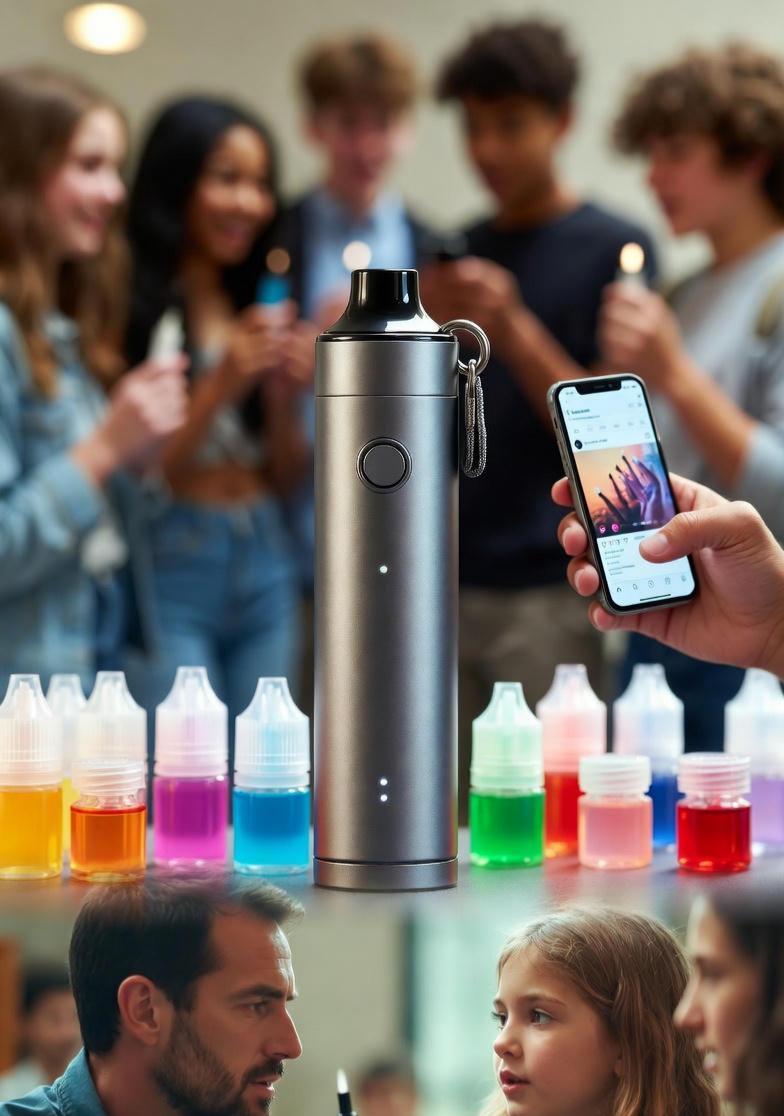
1. L'illusion des “gadgets” inoffensifs” Les e-cigarettes modernes sont souvent conçues dans un style épuré et minimaliste. Pour un adulte, elles ont un aspect professionnel ; pour un enfant, elles ressemblent à des jouets high-tech, à des clés USB ou même à des articles de papeterie de luxe. Cette “gadgétisation” masque la réalité de l'appareil. Elle abaisse la barrière psychologique à l'entrée, donnant l'impression que le vapotage est plus une tendance technologique qu'une habitude chimique.
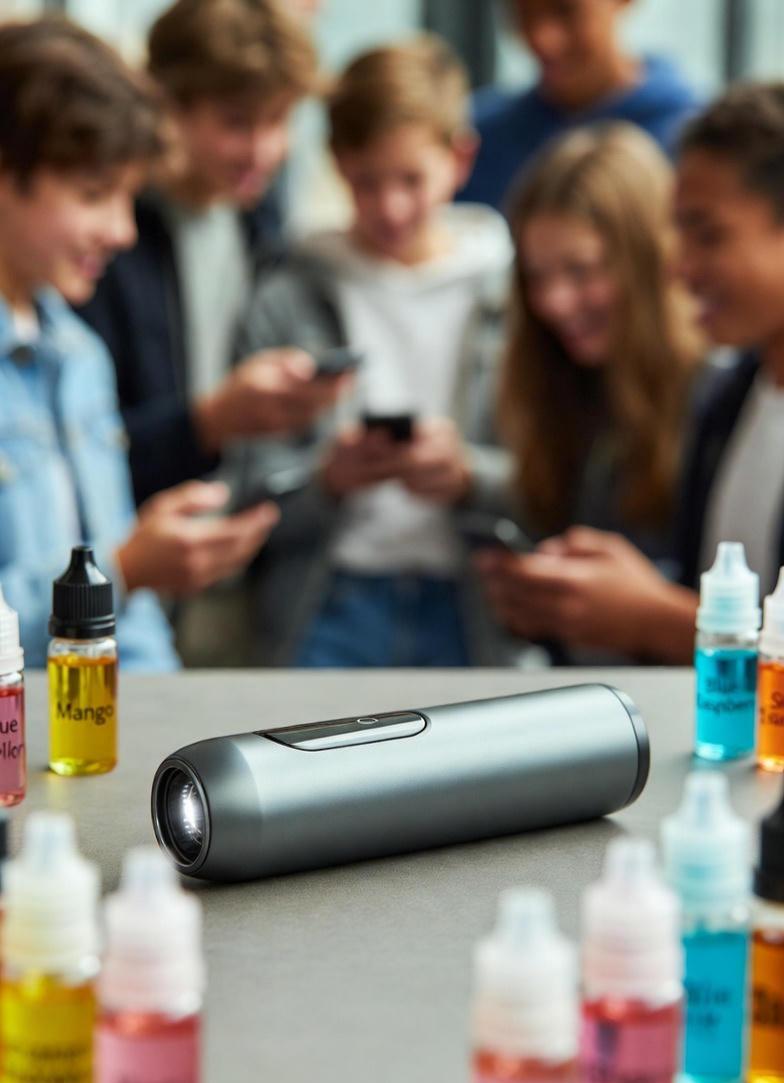
2. Le piège de la saveur Alors que les fumeurs adultes préfèrent souvent le tabac ou le menthol pour retrouver leurs anciennes habitudes, le marché est inondé d'arômes de type “bonbons”. Si ces saveurs plaisent à certains adultes, elles attirent surtout les adolescents. Un jeune de 13 ans ne recherche pas une dose de nicotine, mais le goût de la mangue, de la framboise bleue ou de la crème brûlée. Ces arômes masquent la dureté de la nicotine, ce qui facilite dangereusement l'inhalation profonde et fréquente.
3. La pression des pairs de la “culture cool” Au collège, le désir d'appartenance est écrasant. Les médias sociaux ont romancé les “tours de fumée” et la chasse aux nuages, transformant un risque pour la santé en monnaie sociale. Lorsqu'un enfant voit ses camarades fumer, cela devient un rite de passage, une façon de prouver qu'il est mature, alors qu'en réalité, il cause des dommages à long terme à un cerveau encore en construction.
4. La vérité sur la santé : il ne s'agit pas seulement de “vapeur d'eau”.” Le mythe le plus répandu chez les adolescents est que le vapotage est “juste de la vapeur aromatisée”. En tant que professionnel, je me dois de démentir ce mythe. La nicotine crée une forte dépendance et, dans un cerveau en développement de 13 ans, elle peut modifier de façon permanente les circuits responsables de l'attention, de l'apprentissage et du contrôle des impulsions. Nous parlons ici de conséquences cognitives à long terme qu'un enfant ne peut pas comprendre.
IV. Un guide pour les parents : Comment protéger vos enfants
Si vous êtes un parent et que vous ressentez le même malaise que celui que j'ai éprouvé avec la fille de mon amie, vous n'êtes pas seul. Voici comment repérer les signes et agir :
- Cherchez les signes cachés : Les e-cigarettes ne laissent pas l'odeur pesante du tabac, mais elles laissent un léger parfum sucré ou fruité qui persiste sur les vêtements ou dans les pièces. Surveillez les chargeurs “technologiques” inhabituels qui ne semblent pas appartenir à un téléphone ou à un ordinateur portable.
- Symptômes physiques : Une soif accrue (la nicotine provoque une sécheresse de la bouche), des saignements de nez ou une irritabilité soudaine lorsqu'ils ne sont pas sortis depuis un certain temps sont des signaux d'alarme subtils.
- L'art de la communication : Ne commencez pas par un interrogatoire. Si vous trouvez un dispositif ou si vous soupçonnez quelque chose, abordez la question comme une discussion sur la “manipulation marketing”. Expliquez-leur comment les entreprises essaient de piéger les jeunes pour en faire des clients à vie. Donnez-leur l'impression qu'ils “battent le système” en refusant de fumer, plutôt que d'obéir à papa et maman.“
V. Conclusion : Construire ensemble un mur de protection
La lutte contre le vapotage chez les mineurs n'est pas une lutte contre l'industrie de l'e-cigarette ; c'est une lutte pour l'intégrité de notre société. En tant que chef d'entreprise, je demande à mes pairs de mettre en œuvre les technologies de contrôle de l'âge les plus rigoureuses qui soient. Nous devons soutenir une législation qui empêche ces produits d'être vendus dans les magasins de proximité des écoles et qui réprime le marketing prédateur sur les médias sociaux.
Aux parents, éducateurs et régulateurs : nous sommes du même côté. Notre objectif est un monde où les e-cigarettes remplissent leur fonction pour les adultes tout en restant invisibles et inaccessibles pour les enfants. Protégeons les enfants de 13 ans du monde entier. Ils méritent une enfance sans dépendance chimique, et nous leur devons d'être les gardiens de cette frontière.
Le résultat est simple : Si un enfant fume, tout le monde est perdant. Travaillons ensemble pour faire en sorte que ce “regard d'incertitude” dans les yeux d'un enfant devienne une chose du passé.
 English
  Deutsch
  Français
  Italiano
  Español
  Nederlands
  Polski
  日本語
日本語  Čeština
  Português