
I. Introduction: A Moment of Deep Unease
Recently, I had a conversation with my friend’s 13-year-old daughter that left me profoundly unsettled. I asked her, quite casually, if kids in her school were into vaping. She looked away, her eyes darting with a flicker of hesitation before she firmly replied, “No, I don’t do that.”
I want to believe her. I truly do. But as someone who has spent years in the e-cigarette industry, I recognized that look. It wasn’t just teenage defiance; it was the look of a child caught between curiosity and a secret they aren’t equipped to handle. That moment of uncertainty haunted me. It forced me to confront a hard truth: the products meant to help adult smokers transition away from traditional cigarettes are increasingly finding their way into the hands of children who should have never known their taste.
II. A Professional Stance: Profits Should Never Overlook Conscience
Let me be clear from the outset: my website sells e-cigarettes. I believe in the harm-reduction potential for adult smokers. However, being a professional in this industry comes with a heavy burden of social responsibility. Our mission is to provide an alternative for those who have already spent decades struggling with tobacco, not to create a new generation of nicotine-dependent individuals.
There is an old saying in business that “profit is king,” but in this industry, ethics must be the emperor. Any profit made from a minor’s health is not just unethical; it is a betrayal of the industry’s original intent. We must maintain a “zero-tolerance” policy. If our products are reaching 13-year-olds, we aren’t “disrupting” an industry—we are failing a generation. As a merchant, I am advocating for stricter bans and more rigorous age verification because our success should never be measured by the number of children we accidentally recruit.
III. Deep Analysis: Why Are Our Children Becoming Victims?
The question we must ask is: why are children so drawn to these devices? The answer lies in a perfect storm of design, psychology, and social pressure.
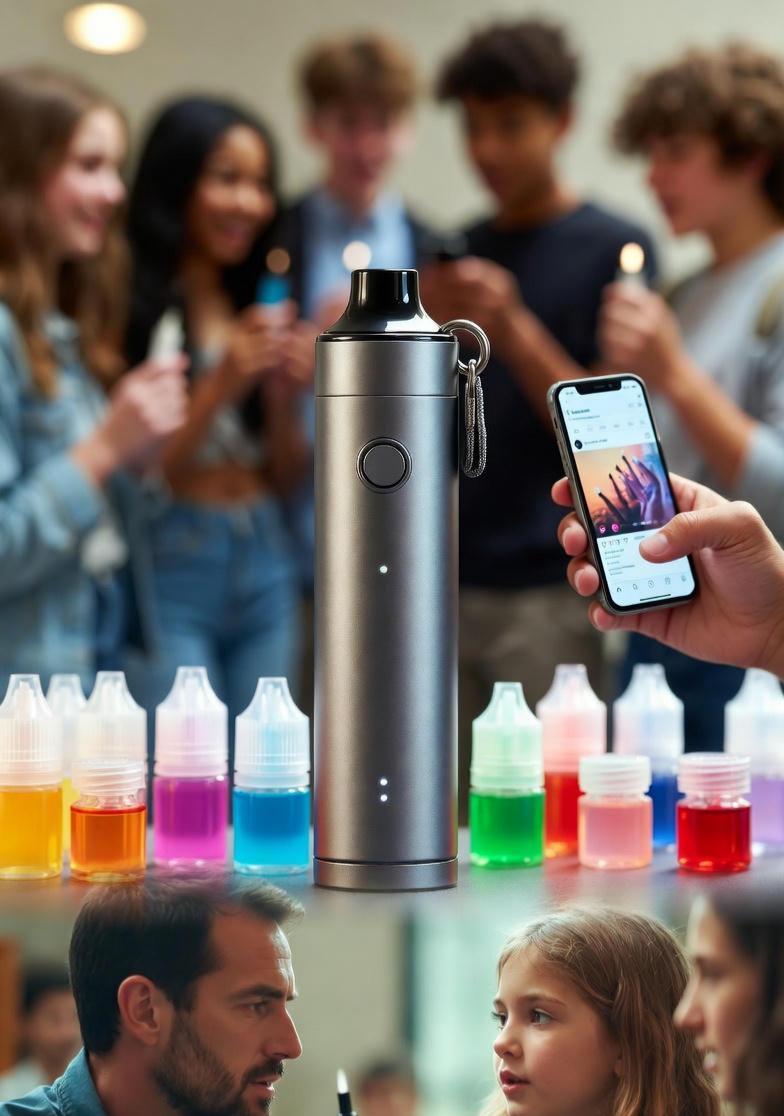
1. The Illusion of Harmless “Gadgets” Modern e-cigarettes are often designed with a sleek, minimalist aesthetic. To an adult, they look professional; to a child, they look like high-tech toys, USB drives, or even fancy stationery. This “gadget-ization” hides the reality of what the device is. It lowers the psychological barrier to entry, making vaping feel more like a tech trend than a chemical habit.
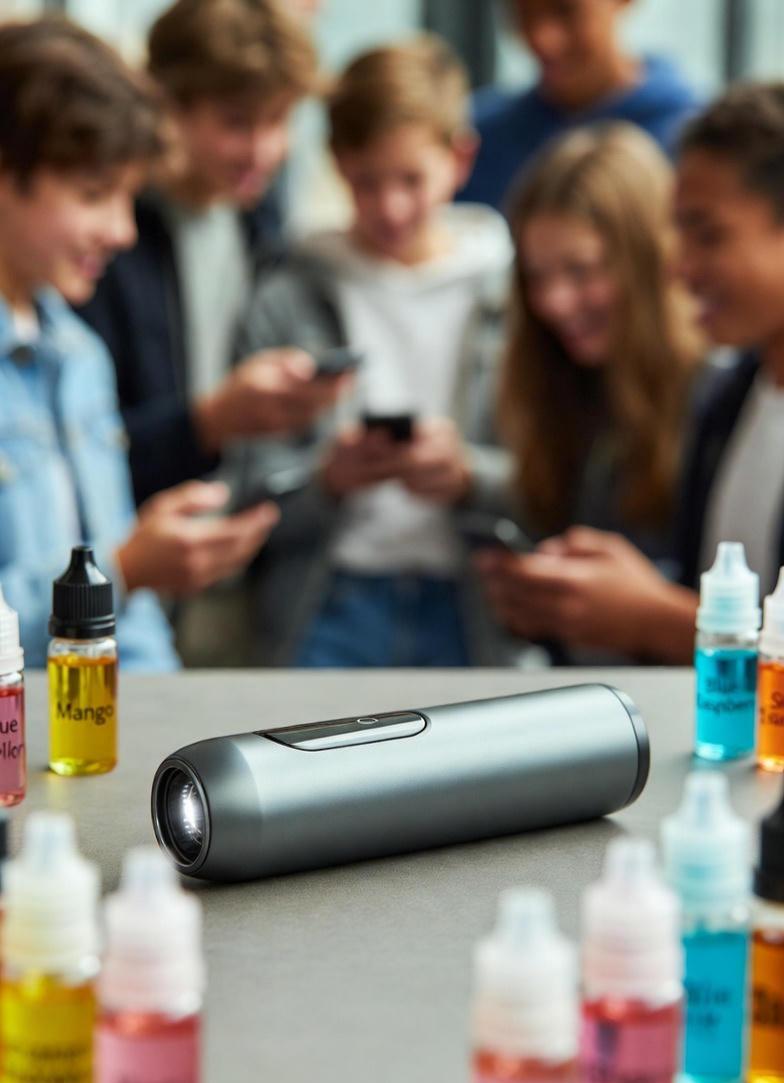
2. The Flavor Trap While adult smokers often prefer tobacco or menthol to mimic their old habits, the market is flooded with “candy-like” flavors. While these appeal to some adults, they are a primary magnet for adolescents. A 13-year-old isn’t looking for a nicotine fix; they are looking for the taste of mango, blue raspberry, or crème brûlée. These flavors mask the harshness of nicotine, making it dangerously easy to inhale deep and often.
3. The Peer Pressure of “Cool Culture” In middle school, the desire to belong is overwhelming. Social media has romanticized “smoke tricks” and cloud-chasing, turning a health risk into a social currency. When a child sees their peers vaping, it becomes a rite of passage—a way to prove they are mature, when in reality, they are causing long-term damage to a brain that is still under construction.
4. The Health Truth: It’s Not Just “Water Vapor” The biggest myth among teens is that vaping is “just flavored steam.” As a professional, I must debunk this. Nicotine is highly addictive, and in a developing 13-year-old brain, it can permanently alter the circuits responsible for attention, learning, and impulse control. We are talking about long-term cognitive consequences that a child cannot possibly comprehend.
IV. A Guide for Parents: How to Protect Your Children
If you are a parent feeling the same unease I felt with my friend’s daughter, you are not alone. Here is how you can spot the signs and take action:
- Look for the Hidden Signs: E-cigarettes don’t leave the heavy stench of tobacco, but they do leave a faint, sweet, or fruity scent that lingers on clothes or in rooms. Watch for unusual “tech” chargers that don’t seem to belong to a phone or laptop.
- Physical Symptoms: Increased thirst (nicotine causes dry mouth), nosebleeds, or sudden irritability when they haven’t been “out” for a while are subtle red flags.
- The Art of Communication: Don’t start with an interrogation. If you find a device or suspect something, approach it as a discussion about “marketing manipulation.” Tell them how companies try to trick kids into becoming lifelong customers. Empower them to feel like they are “beating the system” by refusing to vape, rather than just “obeying mom and dad.”
V. Conclusion: Building a Wall of Protection Together
The fight against underage vaping is not a fight against the e-cigarette industry; it is a fight for the integrity of our society. As a business owner, I call upon my peers to implement the most rigorous age-gate technologies available. We must support legislation that keeps these products out of convenience stores near schools and cracks down on predatory social media marketing.
To the parents, educators, and regulators: we are on the same side. Our goal is a world where e-cigarettes serve their purpose for adults while remaining invisible and inaccessible to children. Let us protect the 13-year-olds of the world. They deserve a childhood free from chemical dependence, and we owe it to them to be the guardians of that boundary.
The bottom line is simple: If a child is vaping, everyone loses. Let’s work together to make sure that “look of uncertainty” in a child’s eyes becomes a thing of the past.
 English
  Deutsch
  Français
  Italiano
  Español
  Nederlands
  Polski
  日本語
日本語  Čeština